Labyrinth Walking Meditation: A Practical Guide
A labyrinth is a single winding path that leads to a center and back out again. Walking one slowly is among the oldest forms of moving meditation.
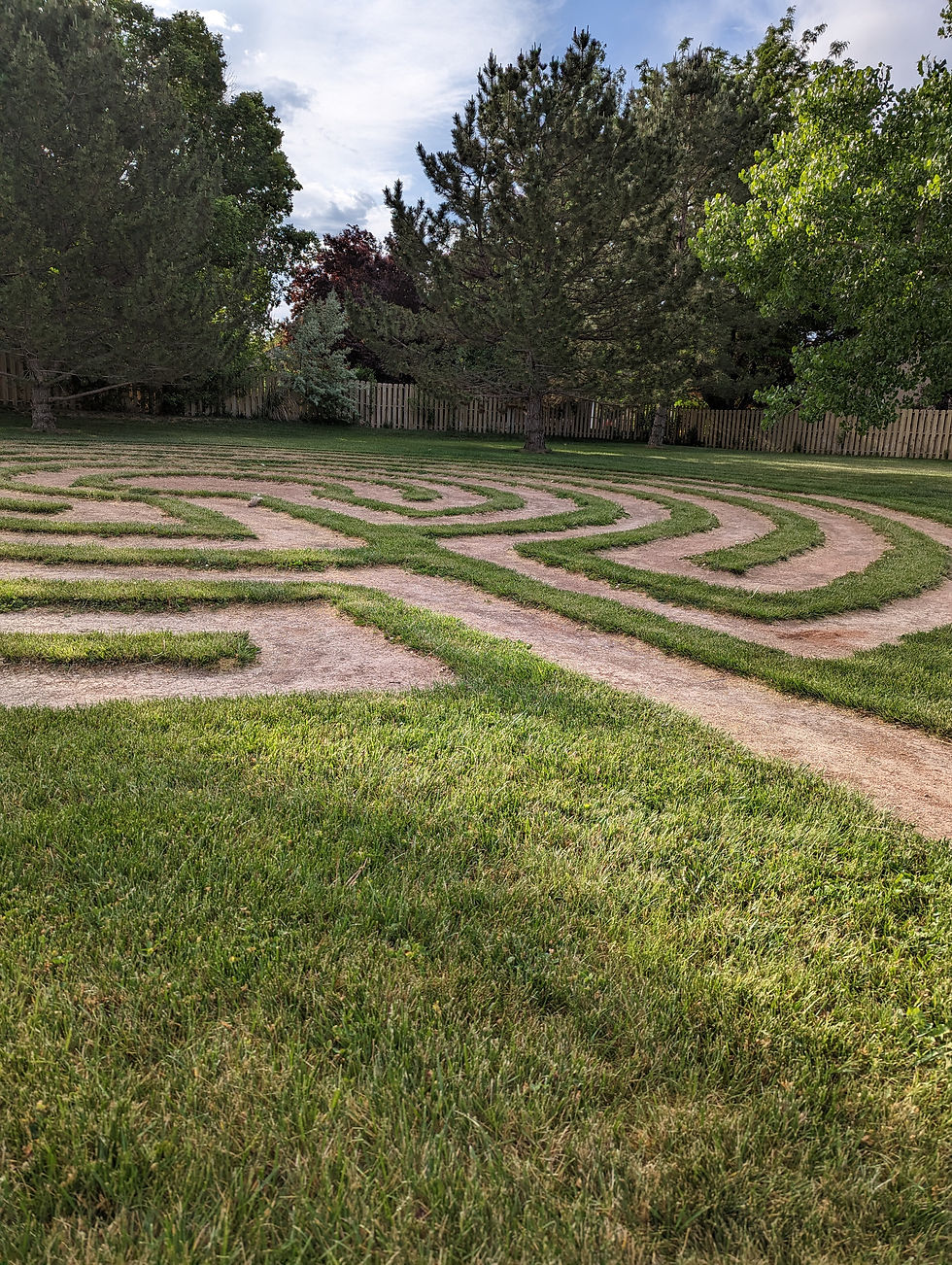
Two of the most read essays on this site, Walk the Labyrinth, Part 1 and Part 2, describe walking a small labyrinth beside a neighborhood church. Readers often ask how to start. This guide covers what a labyrinth is, how it differs from a maze, and a simple way to walk one as a meditation, whether you have a labyrinth nearby or only a quiet path.
A labyrinth is not a maze
The two words are often used interchangeably, but they describe opposite experiences.
- A maze is a puzzle. It has branching paths, dead ends and choices, and it is designed to make you lose your way.
- A labyrinth (in the sense used for walking meditation) has a single path, sometimes called unicursal. There are no choices to make. If you keep walking, you will reach the center, and the same path brings you back out.
That absence of decisions is the point. With nothing to solve, the mind is free to settle into the rhythm of walking.
A very old design
Labyrinth patterns appear in many cultures and periods, carved in rock, laid in floors and cut into turf. Two designs are especially common today:
- The classical, or seven-circuit, labyrinth. A simple pattern, sometimes called Cretan, that winds back and forth through seven rings. It is easy to draw and fits well in a garden.
- The Chartres labyrinth. An eleven-circuit design inlaid in the floor of Chartres Cathedral in France in the early thirteenth century. Its pattern, with a six-petaled center, has been copied in churches, hospitals, parks and retreat centers around the world.
Modern labyrinths may be painted on canvas, mown into a lawn, laid in stone or simply marked out with rocks, as in the photograph on this page.
How to walk a labyrinth: a simple practice
There is no single correct method, but many people use a three-part structure, often described as releasing on the way in, receiving at the center, and returning on the way out.
- Pause at the entrance. Stand still for a few breaths. Feel your feet on the ground. If you like, set an intention or a question, or simply decide to pay attention.
- Walk in slowly. Let your pace be slower than normal. Follow the path wherever it turns. Notice the feeling of each step, the shifts of direction, the sounds around you. When thoughts come, let them pass and come back to the feet. This is the releasing stage: letting go of whatever you arrived with.
- Rest at the center. Stand or sit for as long as feels right. Breathe. Notice what is here: stillness, restlessness, an idea, nothing in particular. This is receiving.
- Walk out the same way. Follow the path back, perhaps a little more briskly, as a transition back into the day. This is returning.
- Pause at the exit. Take a moment before moving on. Some people like to jot down a word or two in a notebook.
A walk through a small garden labyrinth may take five minutes; a full-size Chartres-style labyrinth can take half an hour or more at a meditative pace.
Coordinating breath and steps
If the mind is busy, linking breath to steps gives it something to rest on. One approach described in Part 2 of the essays is to breathe in for four steps and out for six. Another is a step on each in-breath and a step on each out-breath, which slows walking down considerably. Find a rhythm that feels comfortable, not forced.
Walking with other people
Public labyrinths are often shared. There is a simple etiquette: let others enter a little ahead of you, step aside quietly to let faster walkers pass, and if you meet someone coming the other way, one of you steps to the side. There is no need to speak. The essay Part 1 describes the self-consciousness many people feel at first about being seen walking slowly in circles. It passes.
No labyrinth nearby?
- Find one. The World-Wide Labyrinth Locator, a free directory maintained by labyrinth organizations, lists thousands of public and private labyrinths by location. Churches, hospitals, universities and parks are common hosts.
- Use a finger labyrinth. Trace a printed or carved labyrinth pattern slowly with a fingertip. It is a surprisingly calming practice at a desk.
- Make a temporary one. Lay out a classical seven-circuit pattern with stones, rope or garden string on a lawn or a beach.
- Walk any quiet loop. The same principles work on a garden path or a short circuit around a park: slow pace, attention to steps, a pause at the start and end.
Why people find it helpful
Walking meditation is a standard part of mindfulness programs such as MBSR, and the U.S. National Center for Complementary and Integrative Health describes meditation practices, including moving ones, as generally safe for healthy people, with some evidence for benefits on stress. Labyrinth walking specifically has been studied far less, so it is best approached as a contemplative practice rather than a treatment. Many people simply find that moving makes it easier to be still inside, especially those who struggle to sit for long.
Accessibility
Labyrinths can be walked with a cane, a walker or a wheelchair where the path is wide and level enough, and finger labyrinths make the practice available to anyone. Go at whatever pace your body prefers.